
How Manufacturers Use Data Analytics for Predictive Maintenance

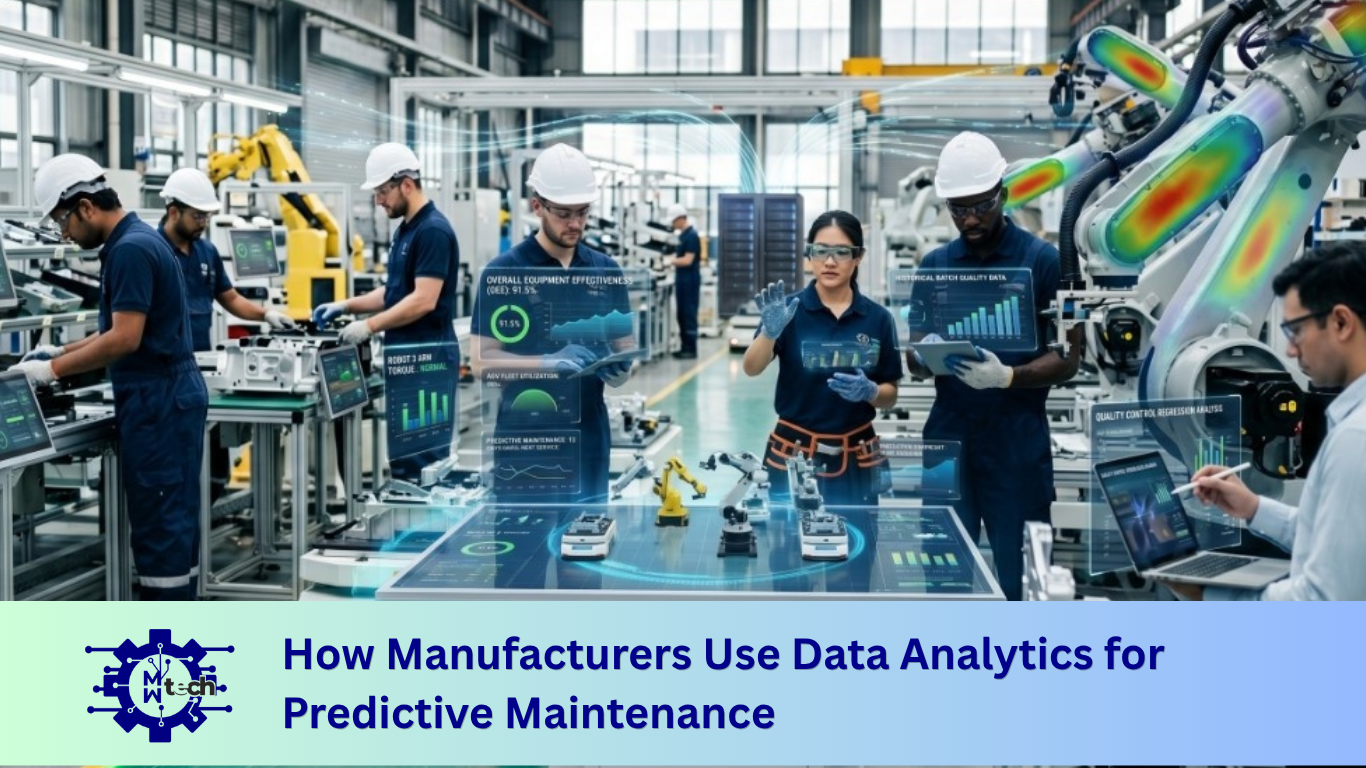
In today’s manufacturing landscape, unscheduled equipment breakdowns can result in loss of productivity, higher maintenance expenses, and inefficiency on various levels. As manufacturers continue to integrate smarter factory ecosystems into their business models, predictive maintenance based on industrial data analytics becomes an integral part of ensuring reliability and maximizing overall efficiency in manufacturing processes.
Across various sectors, including electronics manufacturing, automotive manufacturing, aerospace, semiconductor industry, pharmaceutical industry, and power and energy sector, manufacturers are adopting technologies that allow for equipment failure prediction through data analysis.
In this blog, we’ll discuss predictive maintenance through data analytics, technologies utilized in this process, advantages of this approach, its application in various manufacturing sectors, and how monitoring systems revolutionize the way manufacturers operate today.
What Is Predictive Maintenance?
Predictive maintenance is one of the maintenance systems that use real time data from machines and sensors to predict failures before they occur.
This differs from reactive maintenance, which involves repairing failures once they occur, and preventive maintenance, which occurs after fixed time periods of maintenance have passed, and which does not depend on machine condition.
Using industrial data collected through machines, abnormal patterns and wear can be analyzed.
How Data Analytics Powers Predictive Maintenance
Industrial equipment continuously generates massive amounts of operational data. This includes:
- Temperature readings
- Vibration levels
- Pressure data
- Voltage and current signals
- RPM and motor performance
- Acoustic signals
- Energy consumption
- Environmental conditions
Using advanced data acquisition systems and monitoring platforms, manufacturers collect and analyze this information in real time.
Data analytics tools then identify patterns, anomalies, and trends that may indicate potential failures.
For example:
- Increasing vibration may signal bearing wear
- Abnormal temperature spikes could indicate overheating
- Voltage fluctuations may suggest electrical instability
- Pressure inconsistencies may indicate leakage or blockage
These insights allow maintenance teams to take corrective action before costly failures occur.
Key Technologies Used in Predictive Maintenance
1. Industrial Data Acquisition Systems
Data acquisition systems (DAQ systems) capture real-time signals from sensors, machines, and industrial equipment.
Modern high-speed DAQ systems can collect data from multiple channels simultaneously, enabling manufacturers to monitor critical equipment continuously.
These systems are widely used in:
- Automotive testing
- Aerospace validation
- Semiconductor manufacturing
- Power systems monitoring
- Industrial automation
2. IoT Sensors and Smart Devices
Industrial IoT sensors play a major role in predictive maintenance strategies.
These sensors monitor:
- Machine vibration
- Temperature
- Humidity
- Motion
- Energy usage
- Pressure levels
IoT-enabled monitoring systems provide continuous operational visibility across manufacturing plants.
3. SCADA and PLC Integration
SCADA and PLC systems help centralize machine monitoring and control.
Integrated automation systems allow manufacturers to:
- Track machine performance
- Generate automated alerts
- Analyze operational trends
- Improve process efficiency
- Reduce manual inspections
Smart factories increasingly use SCADA dashboards for real-time predictive maintenance monitoring.
4. Machine Learning and AI Analytics
Advanced manufacturers are now integrating AI-based analytics platforms into predictive maintenance systems.
Machine learning algorithms analyze historical and live data to:
- Detect anomalies
- Predict equipment lifespan
- Improve maintenance scheduling
- Identify hidden failure patterns
AI-powered analytics significantly improve prediction accuracy over traditional monitoring systems.
Benefits of Predictive Maintenance for Manufacturers
Reduced Equipment Downtime
Unexpected downtime can severely impact production schedules and profitability.
Predictive maintenance helps manufacturers identify issues early, allowing repairs during planned maintenance windows instead of emergency shutdowns.
Lower Maintenance Costs
Traditional preventive maintenance often results in unnecessary servicing and component replacement.
Predictive maintenance ensures maintenance activities occur only when required, reducing:
- Spare part costs
- Labor expenses
- Equipment replacement costs
Improved Equipment Reliability
Continuous monitoring helps manufacturers maintain optimal equipment performance.
This improves:
- Product consistency
- Process stability
- Operational reliability
- Manufacturing efficiency
Enhanced Worker Safety
Equipment failures can create hazardous working conditions.
Predictive analytics help identify dangerous equipment conditions before accidents occur, improving workplace safety.
Better Production Efficiency
Real-time monitoring allows manufacturers to optimize machine utilization and minimize interruptions.
This leads to:
- Faster production cycles
- Improved throughput
- Higher operational efficiency
Industry Applications of Predictive Maintenance
Electronics Manufacturing
Electronics manufacturers use predictive analytics to monitor:
- PCB assembly lines
- SMT machines
- Test equipment
- Reflow ovens
- Automated production systems
Real-time monitoring helps reduce production defects and improve product reliability.
Aerospace & Defense
Aerospace systems require extremely high reliability and precision.
Predictive maintenance helps monitor:
- Aircraft components
- Hydraulic systems
- Testing equipment
- Environmental simulation systems
Advanced analytics reduce the risk of critical failures.
Automotive Manufacturing
Automotive manufacturers use predictive maintenance for:
- Robotic automation systems
- Conveyor systems
- CNC machines
- Assembly line motors
- Automated testing systems
This improves production continuity and reduces operational disruptions.
Semiconductor Industry
Semiconductor manufacturing environments require ultra-precise process control.
Predictive monitoring helps maintain:
- Cleanroom equipment
- Vacuum systems
- Thermal control systems
- Wafer processing tools
Even minor equipment failures can impact product quality significantly.
Pharmaceutical Manufacturing
Pharmaceutical industries use predictive analytics for:
- Process monitoring
- Environmental compliance
- HVAC systems
- Packaging automation
- Quality control systems
Continuous monitoring supports regulatory compliance and operational consistency.
Challenges in Implementing Predictive Maintenance
Although predictive maintenance offers significant advantages, manufacturers may face challenges such as:
- Integrating legacy equipment
- Managing large volumes of data
- Selecting the right monitoring systems
- Ensuring cybersecurity
- Training maintenance teams
- Achieving accurate analytics models
Working with experienced industrial automation and system integration partners can simplify implementation and improve long-term scalability.
The Role of Smart Factory Systems
Smart factories rely heavily on predictive maintenance strategies.
By integrating:
- Industrial IoT
- High-speed data acquisition
- Machine vision systems
- SCADA platforms
- Automation software
- Cloud analytics
manufacturers can create intelligent production environments capable of self-monitoring and optimization.
This is becoming increasingly important as global industries focus on:
- Operational efficiency
- Energy optimization
- Zero-defect manufacturing
- Digital transformation
Future Trends in Predictive Maintenance
The future of predictive maintenance is evolving rapidly with advancements in:
- Artificial Intelligence
- Edge Computing
- Cloud-Based Monitoring
- Digital Twins
- 5G Connectivity
- Advanced Sensor Technology
Manufacturers adopting these technologies early will gain significant competitive advantages in productivity, reliability, and operational efficiency.
Why Manufacturers Are Investing in Data Analytics
Industrial data analytics is no longer optional for modern manufacturing operations.
Manufacturers are increasingly investing in predictive maintenance because it helps:
- Reduce unplanned downtime
- Improve product quality
- Extend equipment lifespan
- Increase operational efficiency
- Lower maintenance costs
- Support Industry 4.0 initiatives
As manufacturing systems become more connected and data-driven, predictive maintenance will continue playing a critical role in smart industrial operations.
Conclusion
Maintenance strategies based on data-driven predictive techniques are revolutionizing the way companies handle equipment reliability and productivity.
In fields like aerospace, automotive, electronics, semiconductors, pharmaceuticals, and energy, manufacturers are using advanced technologies such as real-time monitoring systems, automation technologies, and intelligent data analytics to reduce equipment downtime and increase performance.
Companies can achieve this objective by deploying advanced data acquisition systems, smart monitoring systems, and automation technologies. At MeasureMint Technologies, we provide advanced high-speed data acquisition, industrial automation, smart monitoring, and system integration solutions designed to support modern manufacturing and predictive maintenance applications.
If you’re looking to improve operational visibility and build smarter industrial systems, you can request a custom solution tailored to your manufacturing requirements.